(!)Due to
Microsoft's end of support for Internet Explorer 11 on 15/06/2022, this site does not support the recommended
environment.
Instead, please kindly use other browsers like Google Chrome, Microsoft Edge or Mozilla
Firefox.
- Please be informed that there will be no shipment from Japan during the upcoming year-end and New Year holiday period. However, Singapore’s stock items are available during these periods. More details.
- Notice of End of Sales for Economy Series Pneumatic Equipment Category. More details.
Cable Basics
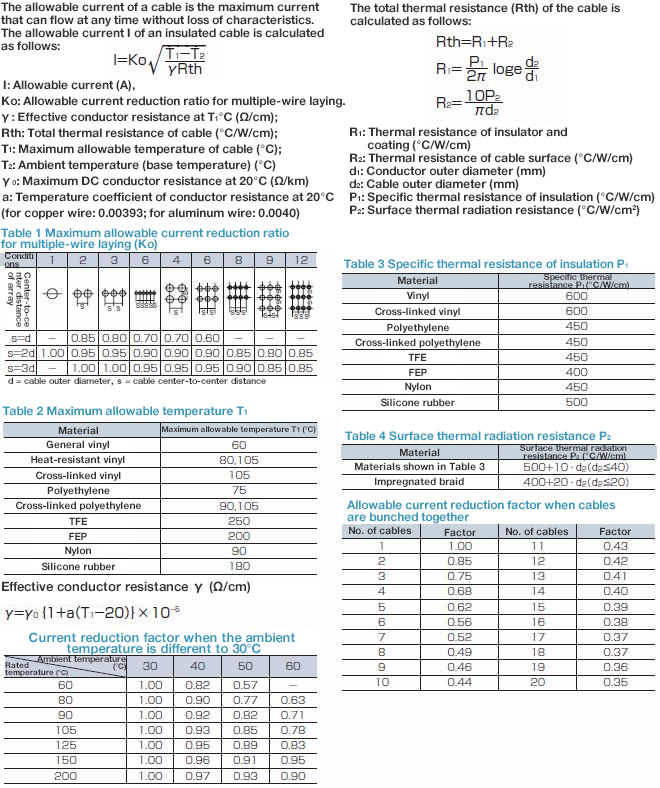
- Allowable current calculation formula
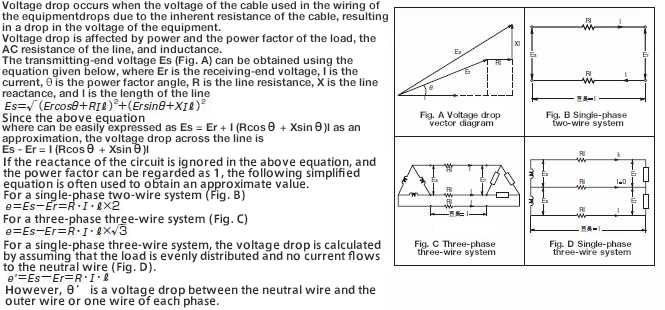
- Voltage drop
- Cable classification
- Classification by location of use
- Classification by application
- Classification of rated temperature and rated voltage
- Selecting a cable
- What is sheath resistance?
- Noise
- Considering noise resistance
Allowable current calculation formula
Voltage drop
Cable classification
As a guideline for selecting proper cables, the manufacturer’s “Wiring Components Catalog” classifies various types of cables from different perspectives.
-
1.
Classification by location of use
Wires and cables are further classified and listed based on their purpose and location of use into the following categories — “For connections within a panel” and “For connection between panels/devices.” -
2.
Classification by application
This section clarifies the structures and functions of various cables. Use this as a selection guideline when classifying and using cables as power supply lines and electrical transmission lines for electrical or electronic equipment. -
3.
Classification of rated temperature and rated voltage
Rated voltages of both single-core cables and multi-core cables are listed in the order of 600 V, 300 V, and less than 100 V. Each cable’s heat-resistant operating temperature range is mentioned in an easy-to-read location in the catalog. -
4.
Standard-based classification
Each country has its own standards for the use of electrical components. Select a cable that meets the standards or is compatible with the standards stipulated in your country.
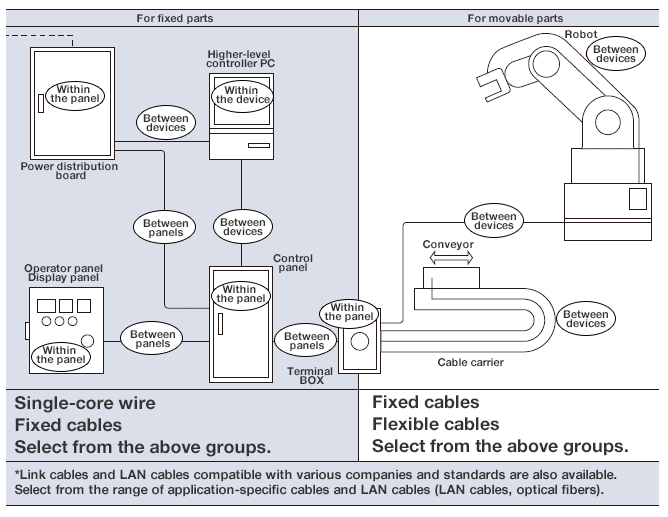
Classification by location of use
The classification of cables into the categories “For connections within a panel” and “For connections between panels/devices,” based on the purpose and location of use, serves as a guideline for selecting cables.
Classification by application
Based on their application, cables for electrical/electronic equipment are classified into two
main categories—power supply cables and electrical signal transmission cables. In the case of
power supply cables, the level of voltage and current of the electricity passing through the
cable is an important factor, whereas in the case of electrical signal transmission cables, the
method by which electric signals are transmitted is important.
Understanding the structure and function of cables can serve as a guideline for selecting
appropriate cables.
-
1.
Power supply cables
As power supply cables serve as a point of contact with electric power, they are directly related to the safety regulations of each country, including the Interior Wring Regulations (Note 1). These safety rules and regulations must be considered when selecting the required power supply cables. The Interior Wiring Regulations (Note 1) were established in November 1968 by the Electrotechnical Standards Investigation Committee of the Japan Electric Association as a nationwide standard for the design, installation, and management of electrical facilities at demand points, and are available in the form of booklets.
The Japan Electric Association TEL (03) 3216-0555 (switchboard number) -
2.
Electrical signal transmission cables
Electronic equipment such as computers and data communication equipment require cables with various electrical characteristics. Cables between the peripheral devices of a computer are a part of a heavy transmission circuit. The following factors need to be considered when selecting the required cables:- 1. The cables should have the electrical characteristics needed for transmitting signals between the devices
- 2. Noise prevention (shielding, twisted pairs, etc.)
- 3. The cables must have a certain degree of flexibility (wiring in confined places should be possible)
Classification of rated temperature and rated voltage
“Rated temperature” refers to the lowest temperature at which the cable does not embrittle and
the highest temperature at which the cable does not soften or deteriorate due to heating. Rated
temperature may differ depending on the insulation material. Refer to the operating temperature
range mentioned on each product page of the catalog, and make a decision accordingly. However,
please note that in practice, it is not possible to use the product at its maximum operating
temperature.
“Rated voltage” refers to the highest voltage that may be continuously applied to the cable
without causing dielectric breakdown. Generally, cables rated at 600 V, 300 V and less than 100
V are used “For connections within a panel” and “For connections between panels/devices.” Please
refer to every title on every product page to make a judgment based on the voltage indication of
the product.
Selecting a cable
Various factors such as the applicable voltage, minimum and maximum current, direct current and
alternate current need to be considered when selecting cables for electrical/electronic
equipment.
However, unlike power cables and communication cables, there are several types of cables for
electrical/electronic equipment with hardly any standardization, making the selection process
difficult. Therefore, to ensure you select the right cables, define the required electrical
characteristics, required mechanical characteristics such as flex-resistance, flexibility, oil
resistance, and the required operating environment. Then, choose cables that meet those
requirements. Additionally, when the cables are to be connected to connectors and terminals
(when making a cable harness), physical requirements such as compatible cable size and
compatible finishing of the outer diameter should also be considered.
Selecting the size
Consider the following factors when selecting cable size:
- 1. The cable’s allowable current and load current
- 2. Voltage drop
In addition, consider the load on the cable and the overall demand. For example, if the cable is
short in length, the size of the cable may be selected based on the allowable current because
the degree of voltage drop is less in shorter cables. On the other hand, the voltage drop is
higher if the cable is long, hence you need to choose a large-diameter cable.
*Click here for more information on voltage drop.
What is sheath resistance?
The sheath is the cable’s outer coating.
The basic purpose of the sheath is to protect the conductor and insulator inside the cable from
getting wet or damaged.
Although certain sheaths protect cables from specific loads such as repetitive actions of
bending or sliding, or exposure to ultraviolet rays and oil, no sheaths provide protection from
all types of external loads. Therefore, a suitable sheath material should be selected according
to the purpose and conditions of use.
For example, “PVC (polyvinyl chloride),” is often chosen because it is relatively inexpensive.
However, although PVC has improved oil and heat resistance to withstand harsh environments, and
enhanced softness and smoothness to achieve flexibility, PVC may produce toxic gases and dioxins
when burned. Hence, PE (polyethylene) may be used instead for environmental reasons.
FEP (fluoropolymer), which has high heat resistance, weather resistance and mechanical strength,
is also used for robot cables even though it is costlier.
Noise
Noise usually refers to any voltage, current or signal other than that intended. Noise can cause
equipment to malfunction.
Noise such as induced noise, radiated noise and conducted noise is associated with robot
cables.
For example, noise travelling through a robot cable may escape the equipment in the form of
“radiated noise,” or radiated noise may come in contact with robot cables and be emitted in the
form of “conducted noise.”
Noise is a complex interplay of causes and routes that not only affects robot cables,
but also
the peripheral equipment.
Although it may not be possible to solve every issue by only addressing noise prevention in
robot cables, eliminating the cause of noise in one component at a time is an important step.
Considering noise resistance
Noise prevention in robot cables is achieved by shielding.
Robot cables that are shielded for noise prevention are labeled as “Shielded” or
“Noise-resistant” in the product name and specification.
Braided shielding is a type of shield wherein tin-plated annealed copper wire is braided between
the insulator and the sheath.
In braiding, copper wires and fibers are tightly woven in a mesh-like pattern and used to
encapsulate the cable.
Information in the sections “What is sheath resistance?”, “Noise,” and “Considering noise resistance” is based on technical data from Taiyo Cabletec Corporation.
Recommended products
Wire/cable

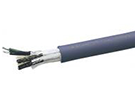

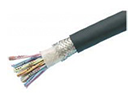
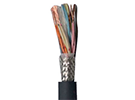
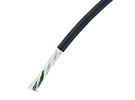
Robot cable


PDF list
Payment Method
- Credit Card
- PayPal
- Bank Transfer



Social Media
MISUMI Contact
Copyright © MISUMI Corporation All Rights Reserved.